NFL First Half Betting UK: Why Half-Time Lines Offer Cleaner Value Than Full-Game Markets
 Available in US
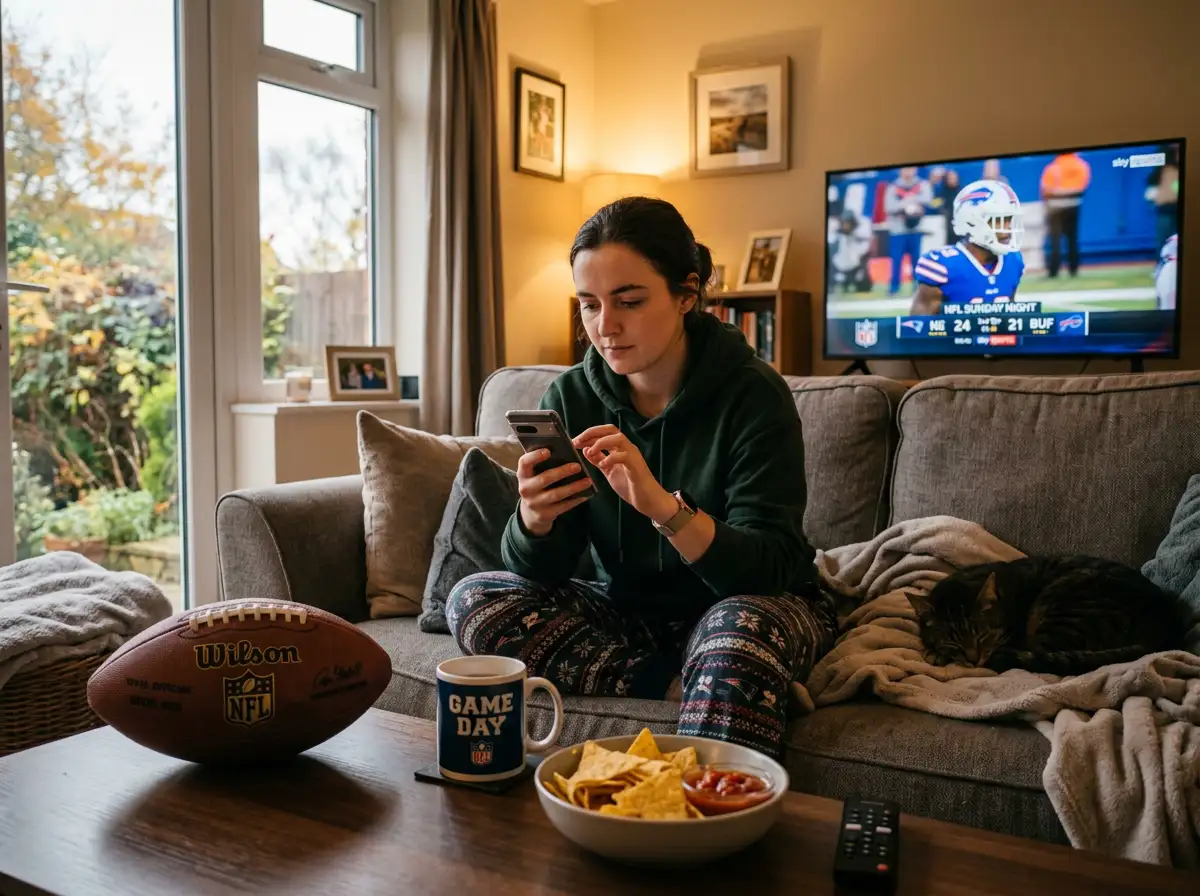
The first-half market is one of the cleanest analytical opportunities in NFL betting, and most UK punters don’t give it a second glance. I understand why — the full-game handicap is the primary market, it’s the one that gets the most analytical coverage, and the first-half equivalent sits quietly below it on the betting screen without much explanation of why it might matter. But the first half in NFL has specific analytical properties that make its lines more exploitable than the full-game equivalents, and understanding those properties opens a consistently useful market to anyone willing to spend an extra fifteen minutes of preparation per game.
Why First Half NFL Bets Attract Sharp Attention
Bookmakers receive less volume on first-half NFL markets than on full-game markets. That reduced volume means their risk management resources are more concentrated on the full-game line. The first-half line is typically derived from the full-game line using a standard formula — set at roughly half the full-game handicap, with a slight adjustment for opening-drive variance — rather than being independently assessed with the same depth as the full-game equivalent. This derivation creates occasional pricing discrepancies between the first-half and full-game lines that careful analysis can identify.
The scoring patterns within NFL games also create a structural first-half consideration. A 2024 season in which favourites won outright at a historically high 71.7% rate produced games where first-half scoring was often more conservative than the final score suggested — teams leading at halftime frequently managed the second half conservatively, protecting leads rather than pushing for additional scoring. The implication: full-game totals set to reflect a high-scoring game expectation don’t always cascade proportionally into first-half totals, creating situations where the first-half total sits above where the first-half scoring history would analytically justify.
Coaching tendencies in first halves are more predictable than full-game tendencies because they’re less situational. A team that trails by fourteen in the fourth quarter plays completely differently from the same team trailing by seven in the second quarter. Coaching response to deficit size varies enormously and is difficult to model in full-game analysis. First-half analysis removes most of these situational variables — both teams are still operating their base strategic plan in the first half, and their first-half tendencies are more consistent from game to game than their full-game approaches. For analytical purposes, that consistency is valuable.
NFL First Half ATS Trends Worth Tracking
The most consistent first-half ATS pattern I’ve tracked relates to the opening-drive conservatism that characterises most NFL teams’ first-half approach. Teams install their most established, least-risky plays early in a game — the concepts they’ve executed with highest repetition in practice, the formations that expose them least to early turnovers. This conservatism is most pronounced in road games, where the visiting team’s coaching staff typically prioritises avoiding an early deficit over establishing an aggressive game-plan.
Road underdogs in the first half cover the spread at rates that consistently exceed their full-game first-half implied probability, for exactly this reason. A team receiving seven points on the full-game handicap typically plays the first half as a more competitive game than a seven-point implied deficit suggests, because both teams are in conservative opening-drive mode. The road underdog first-half line — often set around three to three and a half points for a full-game seven-point underdog — reflects this conservatism less fully than the underlying tendency warrants.
Heavy public favourites show a corresponding first-half pattern. Public money concentrates on the full-game favourite, which typically pushes the first-half favourite’s line in the same direction. When the public is loading more than 65% of stakes on a full-game favourite, their first-half line gets compressed along with the full-game line — creating a similar fade opportunity in the first-half market as exists in the full-game market. Industry data showing a 63% failure rate for 65%+ public favourites across multiple seasons is derived from full-game results, but the first-half market dynamics that create that pattern are arguably even more pronounced, given that the first half is specifically the period of maximum coaching conservatism and minimum situational variability.
Available Markets at UK Bookmakers: What’s Available and What’s Not
First-half handicap and first-half total are the core products. Not all bookmakers offer both for every game — prime-time fixtures (Sunday Night Football, Monday Night Football, Thursday Night Football, and all playoff games) typically have full first-half market suites. Early-window Sunday games between smaller-market teams may have limited or no first-half options at some operators. If first-half betting is a significant part of your approach, it’s worth identifying which bookmakers have the most consistent first-half market availability across the full weekly NFL slate.
First-half totals are often where the most actionable value appears. The bookmaker’s first-half total is derived from the full-game total using roughly a 45-50% ratio — a game with a full-game total of 48 will typically carry a first-half total of around 22 to 24. This derivation doesn’t account for team-specific first-half scoring patterns, which vary meaningfully. Teams with strong first-half offences — particularly those that use their most explosive play-calling early in games before opponents have adjusted — generate first-half scoring at rates above the 45-50% ratio implied by the derived total.
First-quarter markets are less commonly available and carry even lower volume than first-half markets. Where they exist, they function on the same analytical principles but with smaller sample sizes and more variance. The quarter betting markets are best treated as occasional opportunities rather than systematic analytical targets.
The foundational spread betting knowledge that makes first-half analysis most productive — understanding how handicap lines are set, what movement patterns mean, and how to assess cover probability — is developed in the NFL spread betting guide for UK punters.
One operational note on integrating first-half markets into a broader weekly approach: treat them as complementary to, not replacements for, full-game positions. A game where you have a full-game handicap view and a first-half view that points in the same direction is a stronger analytical position overall — the two markets are telling the same story from different time horizons. A game where your first-half analysis points one way and your full-game analysis points another suggests more underlying uncertainty than either analysis is capturing, and it’s worth reducing position size in both markets accordingly.
Do all UK bookmakers offer NFL first half betting?
No. First-half market availability varies by operator and by game. All major UK bookmakers offer first-half handicap and total for prime-time games (Sunday Night Football, Monday Night Football, Thursday Night Football, and playoffs). For early-window Sunday games, particularly between smaller-market teams, some operators don’t offer first-half markets at all. Coverage tends to improve as the season progresses and more betting volume is established on the NFL slate — Week 1 typically has less first-half market coverage than Week 10.
What is the difference between first half and first quarter NFL lines?
First-half lines cover the entire first two quarters — all scoring that happens before halftime. First-quarter lines cover only the first fifteen minutes of game time. First-quarter markets are much less commonly available at UK bookmakers and carry significantly higher variance due to the small sample of scoring plays. First-quarter results are heavily influenced by the opening drive outcome, which is close to a coin flip regardless of team quality. First-half markets are analytically more tractable because they include enough scoring plays for team tendencies to express themselves.
Prepared by the nfl top Bets editorial staff.