NFL Handicap Betting Explained: Points Spread, Push Rules and ATS Calculation
 Available in US
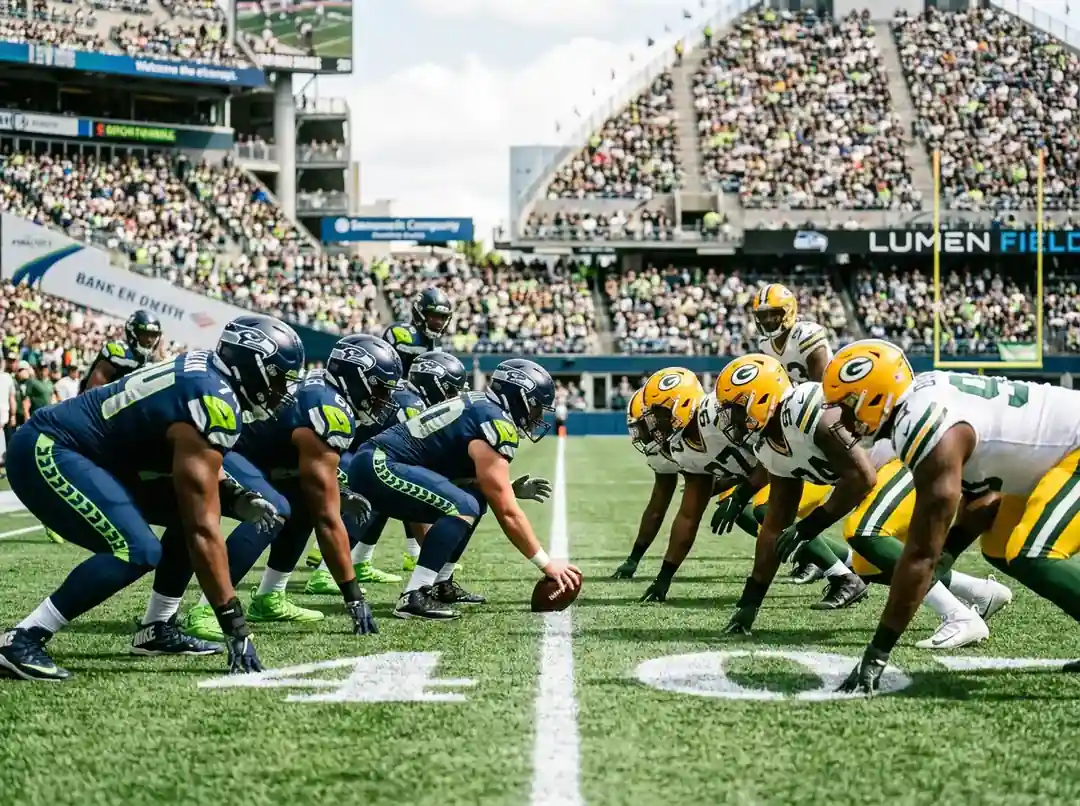
New UK punters coming from football often trip over the handicap market in NFL because the concept looks similar to Asian handicap in football but functions differently in key ways. It’s not complicated once you’ve seen a worked example — and once you understand it, you’ll realise it’s actually a more elegant market than most UK sports offer. The NFL handicap strips away the draw, adjusts for quality difference, and gives you a near-50/50 proposition on virtually every game. That’s genuinely useful for betting.
What Is a Push in NFL Handicap Betting and What Happens to Your Bet?
The push is the outcome unique to point-spread betting that doesn’t exist in most UK sports markets. It occurs when the final margin of victory exactly equals the handicap line — meaning neither side technically covered the spread.
Here’s a concrete example. Say the Chiefs are -3 favourites against the Raiders. You’ve backed the Chiefs -3 on the handicap. The Chiefs win 27-24 — a three-point margin. The handicap line is exactly three. Your bet is a push. The bookmaker returns your stake in full — you don’t win, you don’t lose. This is fundamentally different from a standard loss.
Push situations arise because round numbers are more common final margins than they might statistically be expected to be, particularly three-point margins (the value of a field goal) and seven-point margins (the value of a touchdown plus extra point). Teams with late leads often manage the clock to prevent the trailing team from scoring, which concentrates final margins around these key numbers. Historical data consistently shows that small underdogs — those receiving between one and three points — win outright 43% of the time, which gives you some sense of how frequently the three-point margin is a decisive final outcome rather than a coincidental one.
Half-point lines were invented specifically to eliminate pushes and create a clear winner on every bet. A -3.5 handicap means the favourite needs to win by four or more; a three-point win is a loss for the handicap backer. Most NFL handicap lines at UK bookmakers include the half-point (.5) for exactly this reason — it simplifies settlement and removes the push outcome entirely. When you do encounter a whole-number line, understand that the push scenario is a real possibility.
Why Half-Point Lines Matter More Than You Think in NFL Handicaps
The half-point either side of a key number is the most analytically significant variable in NFL handicap betting. A line of -2.5 versus -3 versus -3.5 creates three fundamentally different propositions even though they differ by only one point total. At -2.5, the favourite wins the handicap even if they win by exactly three. At -3, a three-point final margin is a push. At -3.5, the favourite needs to win by four — meaning a three-point victory is a full loss.
Key numbers in NFL are three and seven. These correspond to the most common scoring increments: a field goal (three points) and a touchdown plus extra point (seven points). Games ending with these exact margins are meaningfully more common than games ending at four or eight. This clustering of final margins around key numbers creates real value in how lines are priced around them. A bookmaker asking you to give up three and a half points versus three points is asking for a non-trivial additional commitment because they know how often games end at three-point margins.
This is why price shopping around key numbers produces above-average returns. Finding -3 instead of -3.5 on a favourite, or +3.5 instead of +3 on an underdog, is worth more than finding +0.05 on a line that isn’t near a key number. The half-point adjacent to three or seven is worth roughly 1.5-2% in probability terms — enough to be meaningful in a 1.90-priced market.
How to Calculate Your ATS Profit on NFL Handicap Bets
The calculation is identical for every NFL handicap bet because the standard price is 1.90 on both sides. Stake your amount, multiply by 1.90 for total return, subtract stake for profit.
A worked example: £50 on the Raiders +3.5 at 1.909 (a slightly better price you found through comparison). The Raiders lose 24-20 — a four-point margin, so they covered the +3.5 spread. Total return: £50 × 1.909 = £95.45. Profit: £45.45.
Now the losing scenario: same bet, same Raiders, but they lose 27-20 — a seven-point margin, so they didn’t cover +3.5. Stake lost: £50. Net position: -£50.
ATS record refers to your overall record against the spread — how often your backed team covers versus fails to cover. At 1.90 (standard price), you need to cover at a 52.6% rate to break even, because 100 ÷ (100 + 90) = 52.6%. That’s the breakeven threshold. Any sustained ATS cover rate above 52.6% on standard handicap prices generates profit. The 2024 NFL season saw favourites win outright at 71.7% of games — but their ATS cover rate was considerably lower, reflecting the gap between “winning” and “winning by enough to cover.” That gap is where handicap betting value lives.
For the complete strategic application of handicap betting in NFL — how to use ATS trends, find value in line movement, and understand which situational factors create above-average cover rates — the comprehensive guide to NFL spread betting in the UK covers everything after these fundamentals.
A parting note on handicap discipline that applies regardless of which team or game you’re analysing: never back a team on the handicap purely because you expect them to win. The question isn’t “who wins?” — it’s “who covers?” Those are related but genuinely different questions, and the difference is where handicap betting either creates value or destroys it. A team can win 68% of their games and be a losing handicap bet if they’re consistently priced as -7 or -8 favourites who typically win by three or four. Tracking both the outright win probability and the cover probability as separate analytical questions is the discipline that turns general NFL knowledge into consistently applied handicap betting edge.
What is the most common NFL handicap line at UK bookmakers?
The most common NFL handicap lines are three points and seven points, reflecting the most frequent final scoring margins in the sport. Three points (a field goal) is the single most common margin, followed by seven (a touchdown and extra point). Lines of -1, -2.5, -3, -3.5, -6, -6.5, -7, and -7.5 account for the majority of NFL handicap markets. Lines above -10 are reserved for significant quality mismatches between teams, which occur less frequently in a league designed for competitive balance.
Can the NFL handicap change after I place my bet?
Once you’ve placed a bet, the odds and handicap line are locked for your position regardless of how the line moves afterwards. If you back a team at -3 and the line subsequently moves to -4.5, your bet remains at -3. This is called ‘getting the better of the number’ — having locked in a more favourable line than what’s currently available. This is one of the strongest arguments for placing NFL handicap bets earlier in the week for games where you expect significant public money to push the favourite’s line further out.
Created by the ”nfl top Bets” editorial team.