NFL Picks UK: How to Make Your Own Game Selections Instead of Copying Tipsters
 Available in US
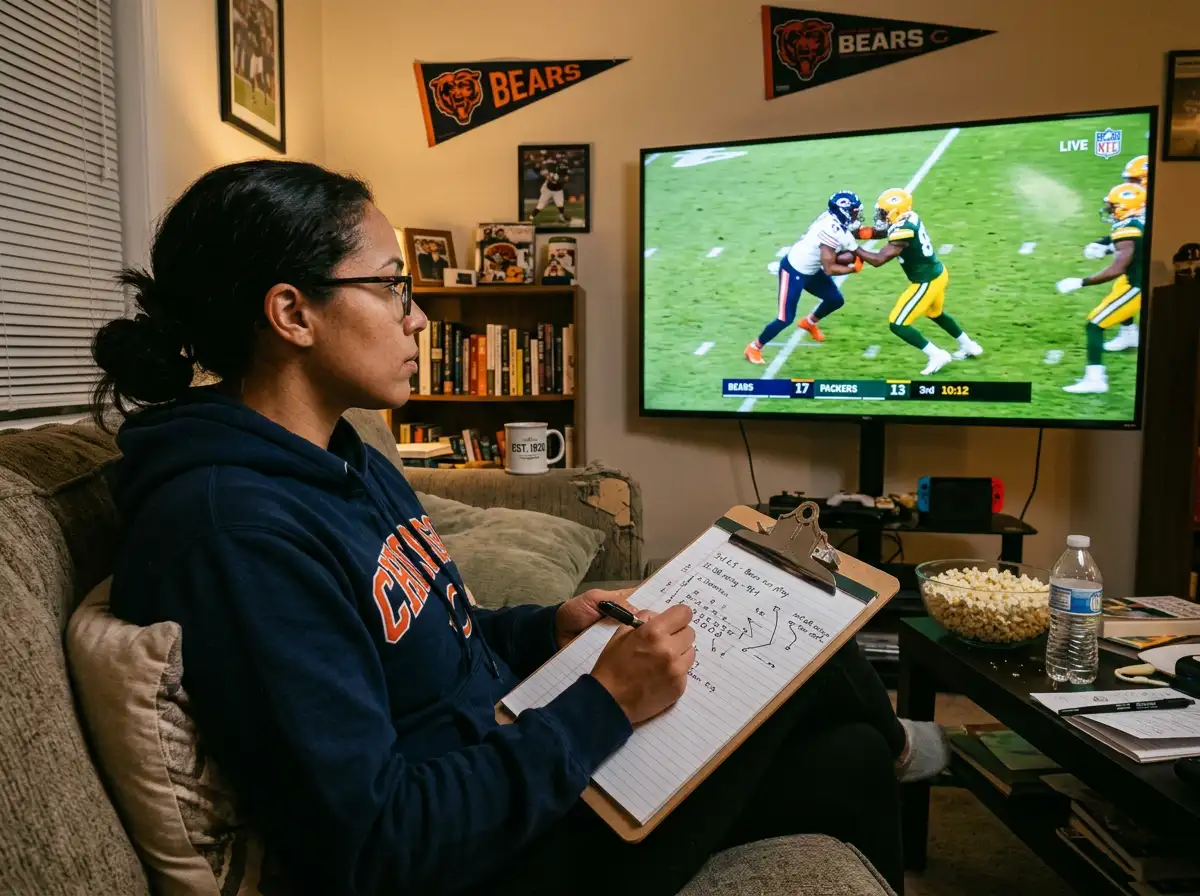
Following tipsters feels like a shortcut but often functions as a long-term handicap. The punters I’ve watched improve most quickly over a season are almost always the ones who started making their own picks — even badly — and used the results to understand why. Copying someone else’s selections tells you nothing about the reasoning that produced them, which means you can’t learn from the losses and you can’t replicate the process when the tipster’s run ends. Making your own picks, on the other hand, forces you to develop an analytical framework that compounds over time.
A Four-Step Framework for Making Your Own NFL Picks
The framework I use starts before looking at the line at all. Starting with the betting market price anchors your thinking to the existing consensus, which is exactly the wrong starting point if you’re trying to identify where the market might be wrong. Start with the game itself.
Step one: identify the line value question. Before checking the current price, form a rough view of what each team’s probability of winning should be based on the available information — roster quality, recent form, home/away context, injury situation. Write down a rough probability. Then check the market price and calculate the implied probability. Is there a gap? If your assessment puts Team A at 58% probability and the market implies 50%, you’ve potentially identified value. If they’re aligned, move on.
Step two: injury check. NFL line movement is more sensitive to injury news than almost any other sport. A team missing their starting left tackle is a meaningfully different team from an analytical standpoint — pass protection affects quarterback performance, which affects scoring. A receiver missing with a hamstring issue changes both the passing yards targets for remaining receivers and the defensive scheme the opponent will deploy. Final injury reports in the US are released Friday afternoon, which translates to late Friday evening or early Saturday morning UK time. Always check the final report before committing to a pick.
Divisional underdogs warrant specific attention, as the historical data is clear: since 2014, divisional underdogs have covered at a 71% rate in opening-week fixtures with a 37-15-1 ATS record. The mechanism — familiarity, preparation efficiency, and favourite conservatism — creates a repeating structural edge that a well-calibrated pick framework should systematically evaluate in every divisional matchup.
Step three: matchup edge. Is there a specific personnel advantage or disadvantage that the headline line doesn’t reflect? A team with a strong pass rush facing an offensive line that struggles against speed rushers. A wide receiver entering a game with a clear height advantage over the corner assigned to cover him. These specific matchup edges — below the level of general team quality — are where informed individual pickers can maintain genuine advantages over mass-market consensus.
Step four: bet sizing. Once you’ve identified a selection, decide the appropriate stake before looking at the price one more time. This prevents the “it looks like good value at this price so I’ll bet more” reasoning that leads to oversizing on inflated confidence. Your stake should reflect your analytical confidence in the process that produced the pick, not the headline attractiveness of the current odds.
Where UK Punters Get Quality NFL Information for Making Picks
Sky Sports extended its NFL rights partnership in August 2025 for more than three years beyond the 2025 season, guaranteeing UK punters access to the most comprehensive free-to-air NFL coverage in history — more games than in any previous broadcast deal. That access matters for pick-making because watching games provides qualitative information that no metrics database captures cleanly: how a team’s offensive line is actually functioning, whether a running back looks fully fit despite being listed as active, how a quarterback handles pressure under different defensive alignments.
Analytics databases — publicly accessible resources tracking offensive and defensive efficiency metrics, yards per play allowed, pressure rates, target share data — provide the quantitative foundation. These resources have improved dramatically in quality and accessibility over the past five years, and the best are genuinely free. The combination of qualitative observation (watching games) and quantitative analysis (efficiency metrics) is more powerful than either alone.
Official NFL injury reports, available through the NFL’s own communications channels and via Sky Sports during the UK broadcast week, are essential weekly inputs. The three-day injury report cycle — Wednesday estimation, Friday full report, Saturday final status — creates a timeline for when different pieces of information are available. Picks made after the Wednesday report and revised after the Friday report are more analytically robust than picks made early in the week from incomplete information.
How to Track Your NFL Picks and Improve Over Time
The records question applies equally to self-made picks as to any other betting activity. A basic tracking format requires: the game, your stated reasoning before the pick, the market and odds, the stake, and the outcome. After thirty or forty picks, review the reasoning column. Are there patterns in what’s working? Are your divisional game picks outperforming your non-divisional ones? Are your totals picks consistently underperforming your handicap picks?
The reasoning review is what separates learning from mere record-keeping. A pick that wins despite flawed reasoning is noise. A pick that loses despite sound reasoning is potentially signal — it suggests the reasoning was right but the variance went against you. Over fifty or sixty picks, distinguishing between the two becomes possible and produces genuine improvement in the selection process that no amount of following external tips can replicate.
For the value identification principles that anchor the most effective NFL pick frameworks, the systematic approach to finding NFL value bets covers the underlying methodology in full.
The comparison between self-made picks and tipster-following often gets framed as a question of quality — “am I as good as the tipster?” That’s the wrong question. The right question is “does following this tipster make me better at betting, or does it make me dependent?” A tipster whose picks you follow without understanding the reasoning produces results you can’t learn from. Over a full season, building your own process — even with more initial mistakes — compounds into analytical capability that no subscription service can replicate.
How many NFL picks should I make each week?
Two to four picks per week is the appropriate range for serious analysis. The NFL regular season slate typically includes thirteen or fourteen games on a Sunday — making a case for betting ten of them means spreading your analytical attention thin enough that most selections are effectively uninformed. Two to four selections per week where you’ve genuinely worked through the four-step framework will almost always outperform a larger portfolio of superficially considered picks.
Is it better to specialise in one NFL conference for picks?
Yes, for most part-time analysts, conference or divisional specialisation produces better results than attempting full-season coverage. Knowing the AFC North personnel, coaching tendencies, divisional dynamics, and historical matchup patterns in depth is more analytically valuable than having shallow knowledge of all 32 teams. The information advantage compounds: deeper knowledge of specific divisions means you process new information about those teams more efficiently and identify relevant signals faster than analysts working from a broader but shallower base.
Published by the nfl top Bets team.